

Anaerobic Digestion in a Biomass Digester
Anaerobic digestion is a proven technology for converting organic waste and agricultural residues into renewable energy. In a biomass digester, microorganisms break down biodegradable material in an oxygen-free environment and produce methane-rich biogas. This process allows farms, waste management companies and industrial operators to transform organic feedstocks such as manure, food waste or crop residues into valuable energy and nutrient-rich fertilizer. With decades of experience in biogas plant construction, EnviTec Biogas delivers reliable anaerobic digestion systems and biomass digester technology for sustainable energy production.

Advantages of biogas
Biogas has many uses, can be easily stored and is an alternative to fossil energy sources in many areas.
Contributes to an improved carbon intensity (CI) score through the utilization of liquid manure, biowaste, and other organic residues.
Biogas is a sustainable substitute for fossil fuels - ideal for electricity, heat and even fuel.
In contrast to wind or solar energy, biogas is available at all times - it can be planned and stored.
Efficiently utilizes organic waste from agriculture, industry and households.
Biogas can be processed through the EnviThan membrane upgrading system to produce pipeline quality RNG.
Biogas can be efficiently utilized in combined heat and power (CHP) plants to generate electricity and heat.
Enables nutrient recycling through the use of fermentation residues, which serve as a high quality organic fertilizer and reduce the reliance on synthetic fertilizers.
Overview

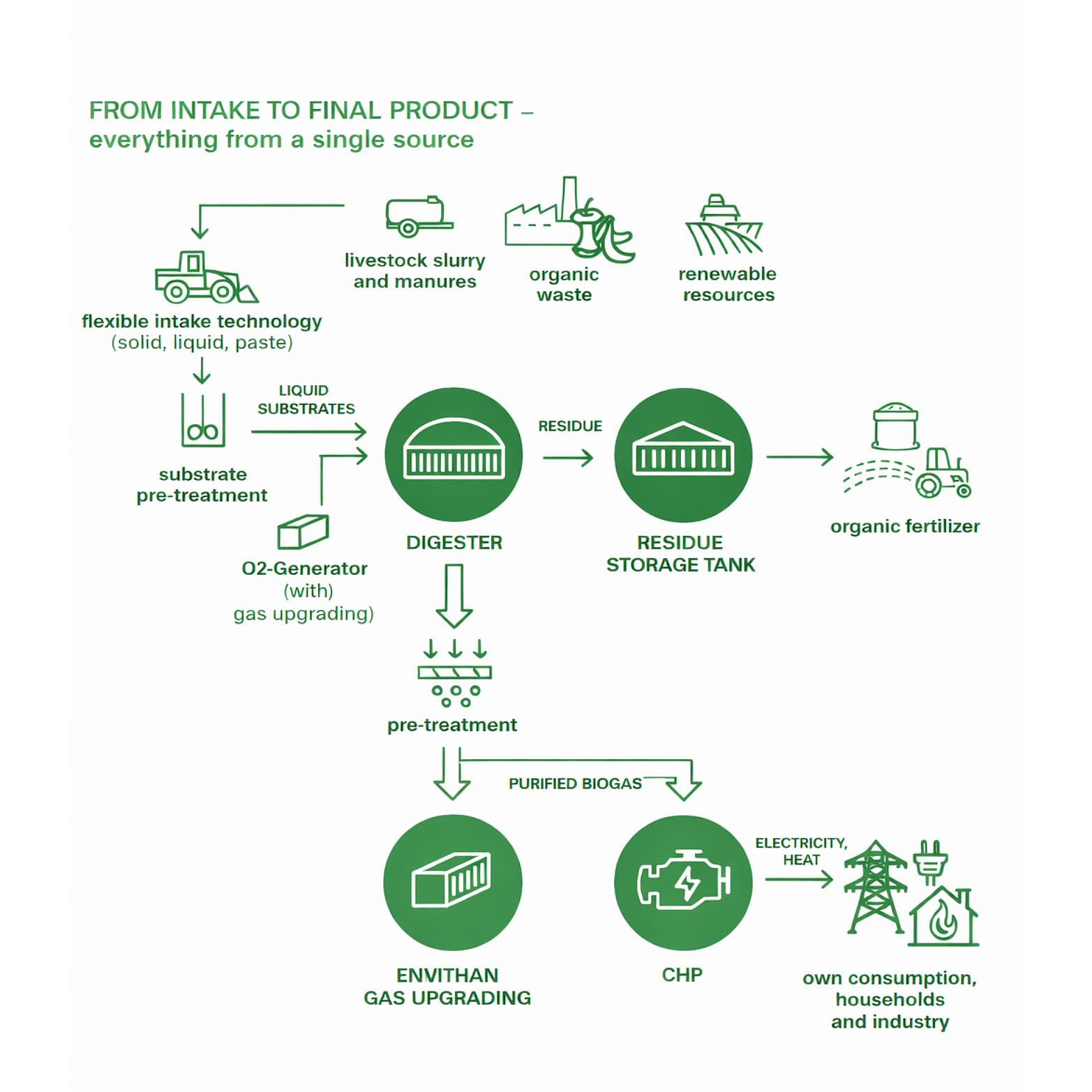
How anaerobic digestion works
Anaerobic digestion is a biological process in which microorganisms degrade organic material in airtight tanks known as digesters. Inside the biomass digester, bacteria convert organic substrates into methane-rich biogas and carbon dioxide under controlled conditions such as temperature, pH value and retention time.
The produced biogas can be used for combined heat and power generation or upgraded to renewable natural gas (RNG). The remaining digestate contains valuable nutrients and can be applied as organic fertilizer in agriculture.
The Role of the Biomass Digester
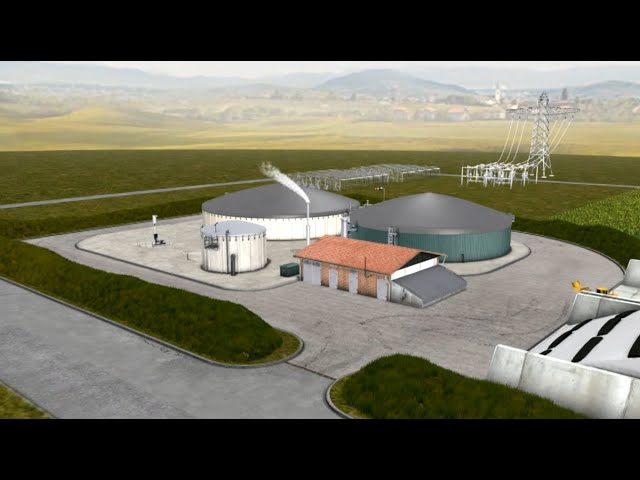
The biomass digester is the central component of every biogas plant. It provides the controlled environment required for efficient anaerobic digestion.
Key functions of a biomass digester include:
- airtight fermentation of organic biomass
- optimal temperature and mixing conditions
- efficient gas collection and storage
- stable biological conversion processes
Modern biomass digesters are designed to process a wide range of feedstocks, including:
- Agriculture, with the cultivation of energy crops as well as animal excrement produced by livestock
- The animal feed industry, with residues from their production
- Slaughterhouses, with their slaughterhouse waste
- Food production and processing industries
- Supermarkets (e.g. food products past their expiry date)
- Breweries, with spent grain and slop
- Restaurants, with food waste
- The ethanol industry (mash)
- The biofuel industry (e.g. glycerine)
- Treatment plants (sewage sludge)
- Agriculture, with the cultivation of energy crops as well as animal excrement produced by livestock
- The animal feed industry, with residues from their production
- Slaughterhouses, with their slaughterhouse waste
- The food production and processing industries
- Supermarkets (e.g. food products past their expiry date)
- Breweries, with spent grain and slop
- Restaurants, with food waste
- The ethanol industry (mash)
- The biofuel industry (e.g. glycerine)
- Treatment plants (sewage sludge)
- These are just a few examples of the many potential input materials for biogas plants.
Benefits of Anaerobic Digestion Technology
Implementing anaerobic digestion offers several advantages for agricultural and industrial operators:
- renewable biogas production from organic waste
- reduction of greenhouse gas emissions
- improved manure and waste management
- production of nutrient-rich organic fertilizer
- generation of renewable natural gas (RNG)
Anaerobic digestion therefore plays a key role in circular economy concepts by transforming organic waste streams into valuable energy resources.
Biomass Digester Solutions from EnviTec Biogas
EnviTec Biogas provides complete anaerobic digestion and biomass digester solutions – from engineering and plant construction to commissioning and operational services. With more than 20 years of experience and hundreds of projects worldwide, the company delivers reliable biogas plants for agriculture, industry and waste management.
Our modular biomass digester systems enable efficient and scalable biogas production and can be integrated with gas upgrading technologies to produce renewable natural gas.


If biogas – then EnviTec!
Each input material/residue has its own characteristics and often needs special treatment as a result. In today’s industry, virtually no two biogas plants are alike in terms of requirements for input materials, digestion, digestate storage and gas upgrading.
Each country has its own raw materials and legal requirements – which means our industry has always been about being as flexible as possible. Looking for a made-to-measure solution for your agricultural business – or a major industrial project? We can offer you a solution with reference projects from 250 kWel to 20 MWel or RNG production from 18,65 SCFM to 3,100 SCFM.
Our goal is to make sure you get as much as you can out of the collaboration, offer the most advanced technical systems on the market. All of this has helped us achieve and maintain our leading position in the global biogas sector.
We are one of the few providers in the market who can serve as a one-stop shop for all the respective stages, and can thus facilitate a successful and smooth project:
Smart investments and innovative concepts – successful industrial projects in a global marketplace can all be found in our References section.
